🙋🏻♀️
Personal Project
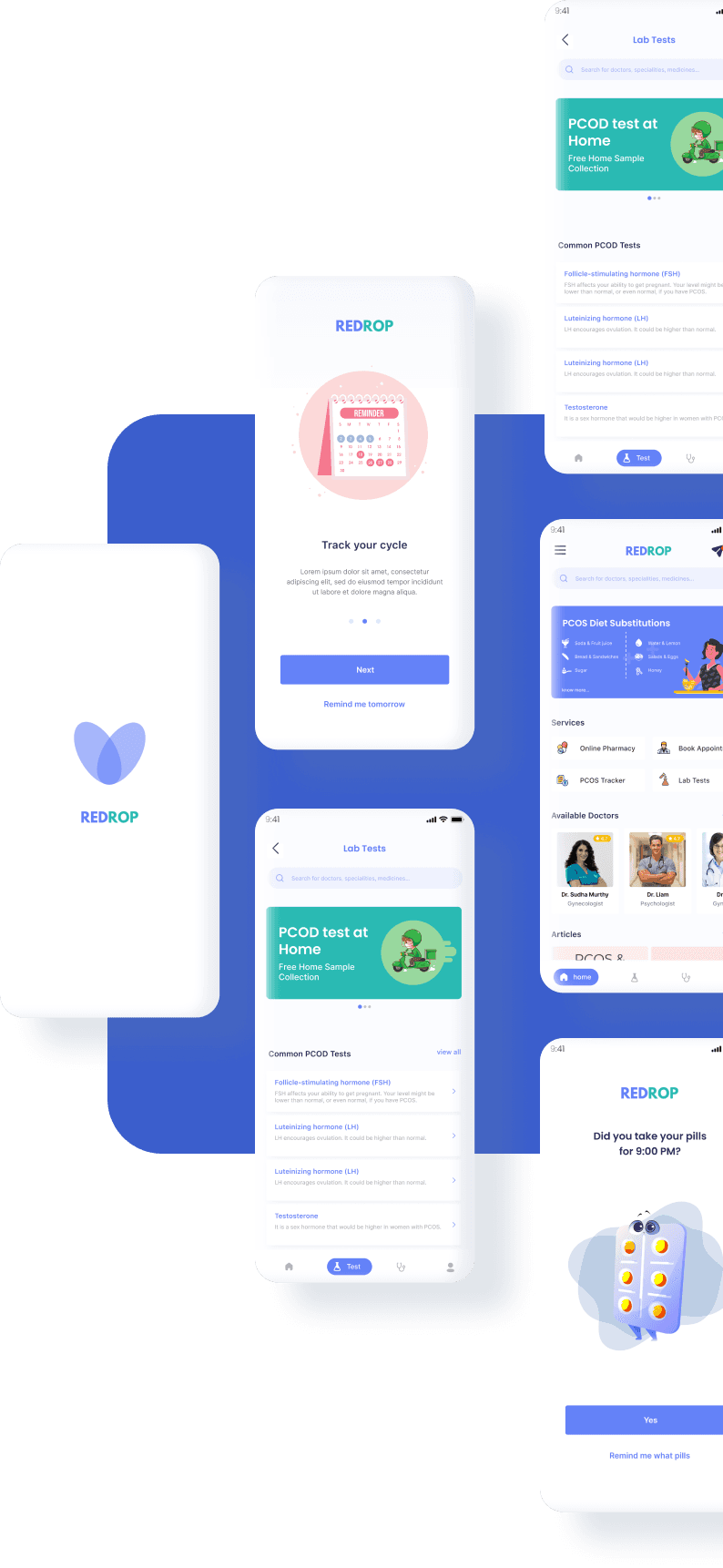
Managing PCOS shouldn’t feel overwhelming.
Polycystic Ovary Syndrome (PCOS) is one of the most common hormonal disorders among women of reproductive age. Women with PCOS may experience irregular menstrual cycles, excess androgen levels, acne, weight fluctuations, and long-term health complications. In India alone, more than 1 million cases are recorded every year
Despite how common it is, managing PCOS often feels confusing and fragmented. Information is scattered. Doctor visits are infrequent. Lifestyle adjustments are difficult to sustain. Many women are left navigating it alone.
Redrop was designed was designed as a dedicated app to help women better understand and manage PCOS through accessible information, tracking tools, and medical support integration.
DESIGN PROCESS
Redrop followed a User-Centered Design (UCD) approach — an iterative process where users and their needs remain central at every stage. Rather than building features first, I focused on understanding who this product was really for.
Who is this app really for?
The app needed to serve three groups:
1.
Women and girls who suspect they may have PCOS
2.
Those already diagnosed
3.
Individuals supporting someone with PCOS
This widened the scope beyond tracking. The solution had to educate, guide, and assist — not just monitor.
QUALITATIVE RESEARCH
Listening before designing: qualitative research
I conducted interviews with 6 individuals to understand lived experiences with PCOS. The goal was depth over volume — gathering nuanced insights into emotional and behavioral challenges.
These conversations revealed patterns around inconsistency in follow-ups, confusion around treatment options, and difficulty maintaining lifestyle changes.
How long have you been diagnosed with PCOD/ PCOS?
What kind of treatment do you prefer for PCOS/ PCOD?
How often do you visit their doctor regarding PCOD?
How often do you visit their doctor regarding PCOD?
QUANTITATIVE RESEARCH
To observe broader trends, I conducted an online survey using Google Forms. 25 people participated.
The survey explored demographics, trust in digital health, and behavioral patterns.
What is your age?
18-25
25-30
30 above
What is your age?
18-25
25-30
30 above
Would you consider making an online appointment with doctor due to the pandemic?
Yes
No
Maybe
On a scale of 10, how much do you trust an online application with your medical records?
0-4
4-7
Above 7
The charts under quantitative research reinforced one thing: users are willing to go digital, but trust must be designed intentionally.
USER PERSONA
Defining a face to the data

Aishani Pachauri
20 years old
she/her
Undergraduate
Delhi, India
Frustrations
Eating restrictions on sweets
Breakouts and Acne
Regular exercising
Interests
Singing
Cooking
Binging Kitchen Nightmares
Frustrations
Eating restrictions on sweets
Breakouts and Acne
Regular exercising
Interests
Singing
Cooking
Binging Kitchen Nightmares
Based on research, I generated feature directions:
Creating awareness about PCOS
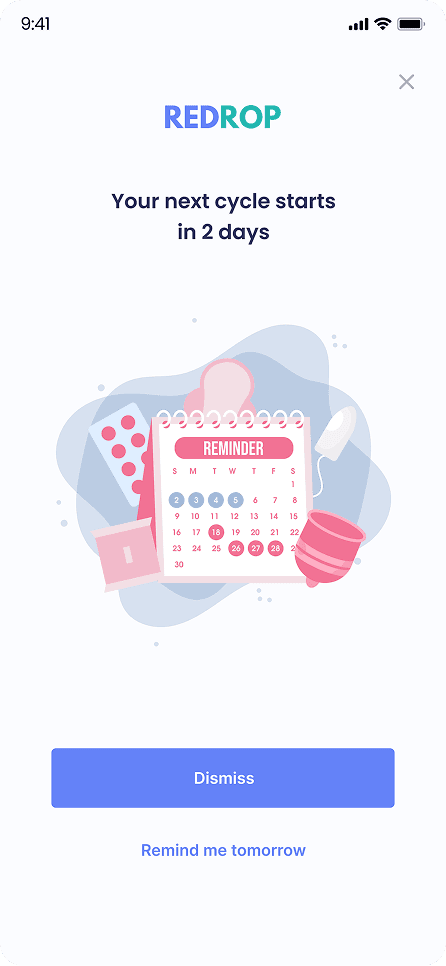
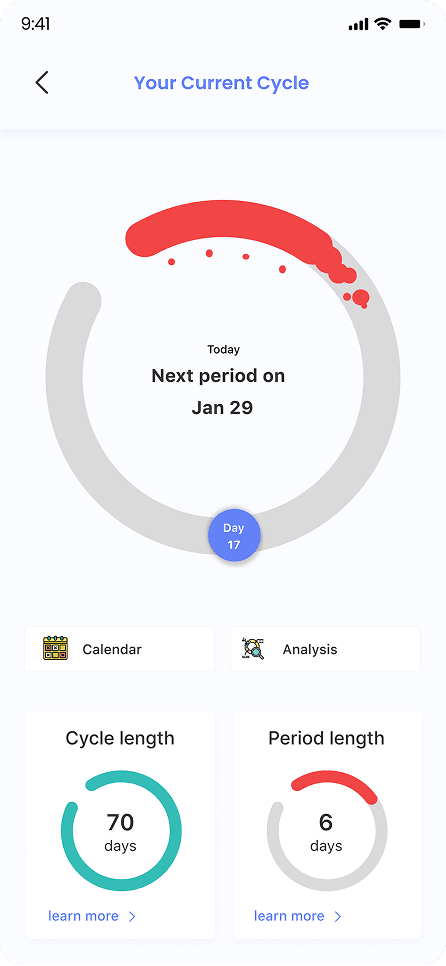
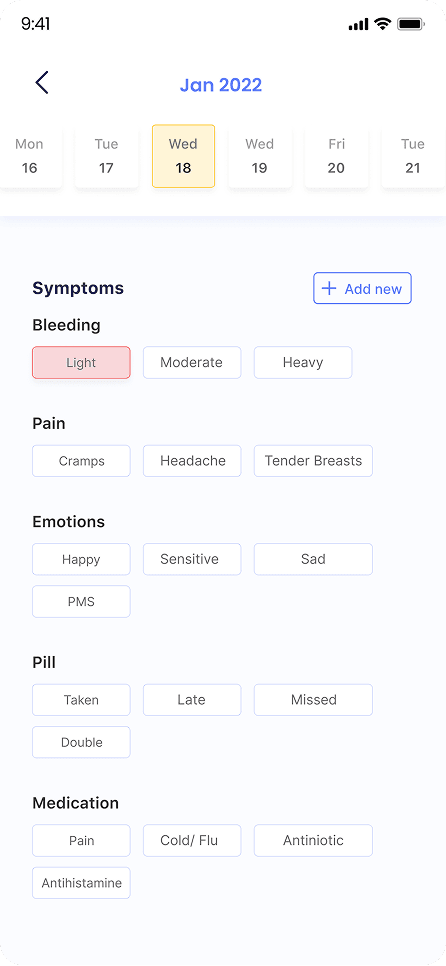
A menstrual cycle tracker
Menstrual cycle analysis
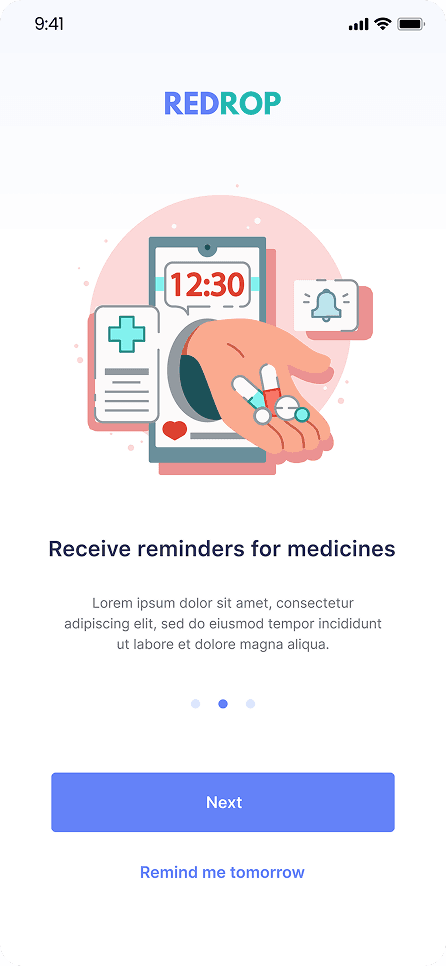
Pill reminders
Questions to ask doctors during digital consultations
Articles and educational content
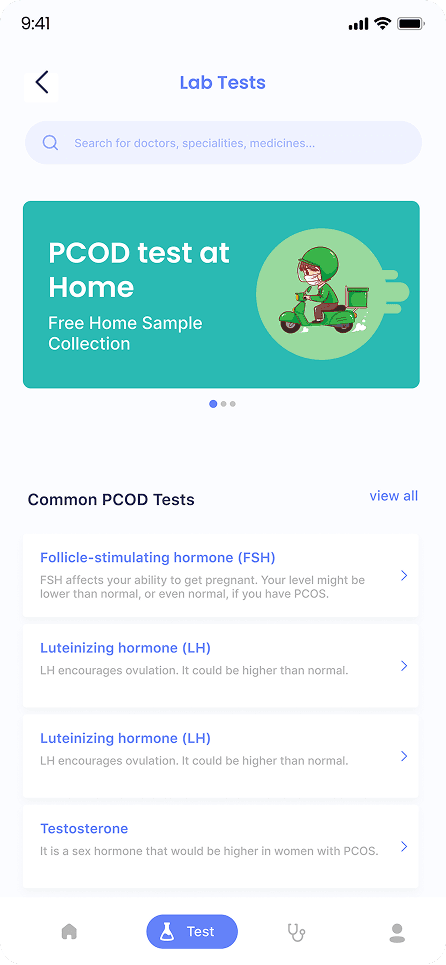
Free home sample collection
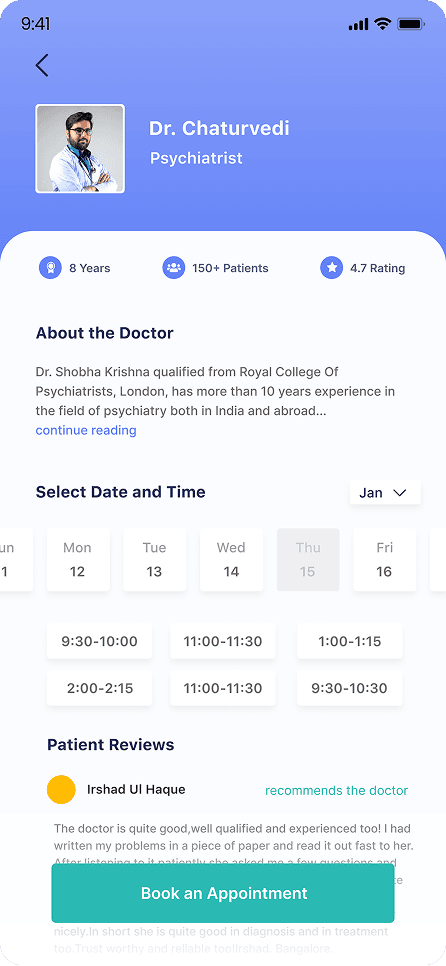
Online doctor appointment booking
Online pharmacy integration
USERFLOW
Structuring the ecosystem
The user flow mapped how someone would navigate the app. The structure ensured medical support and lifestyle tracking coexisted within one ecosystem rather than fragmented tools.
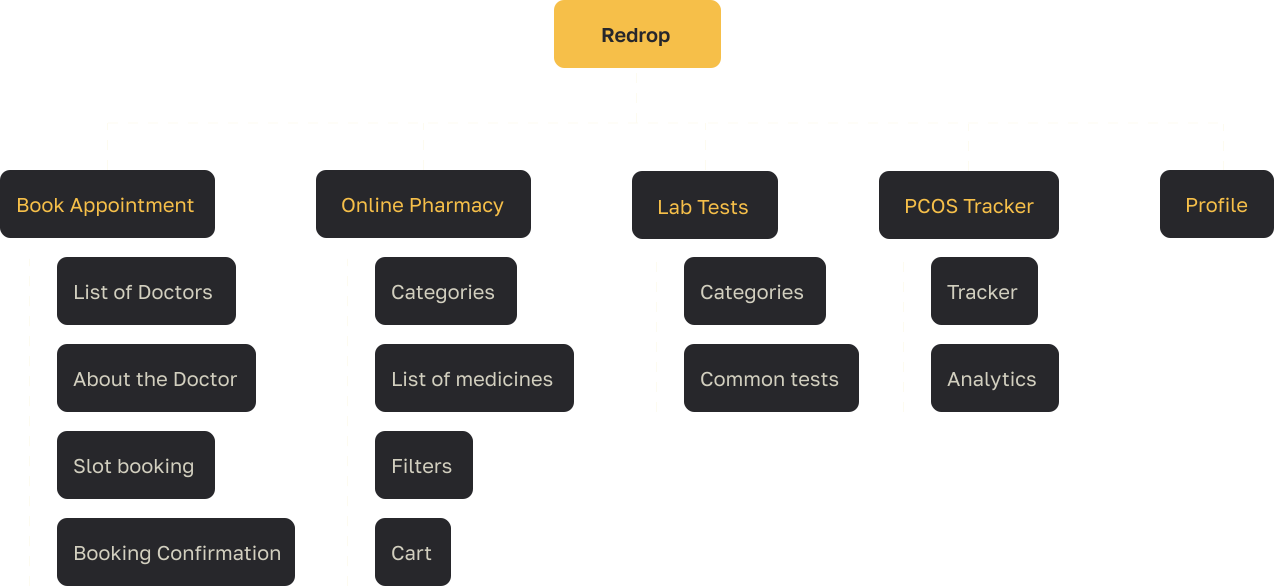
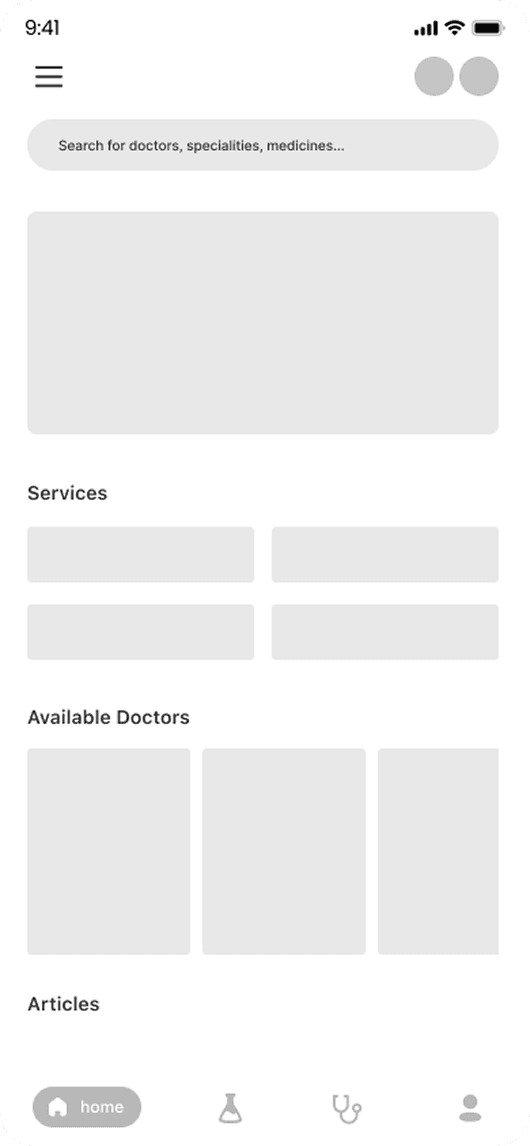
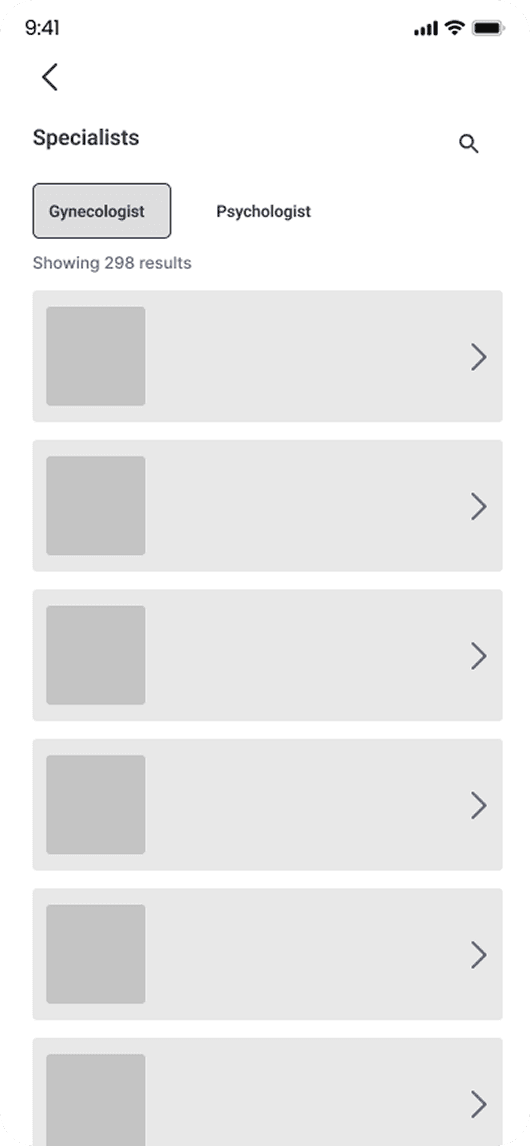
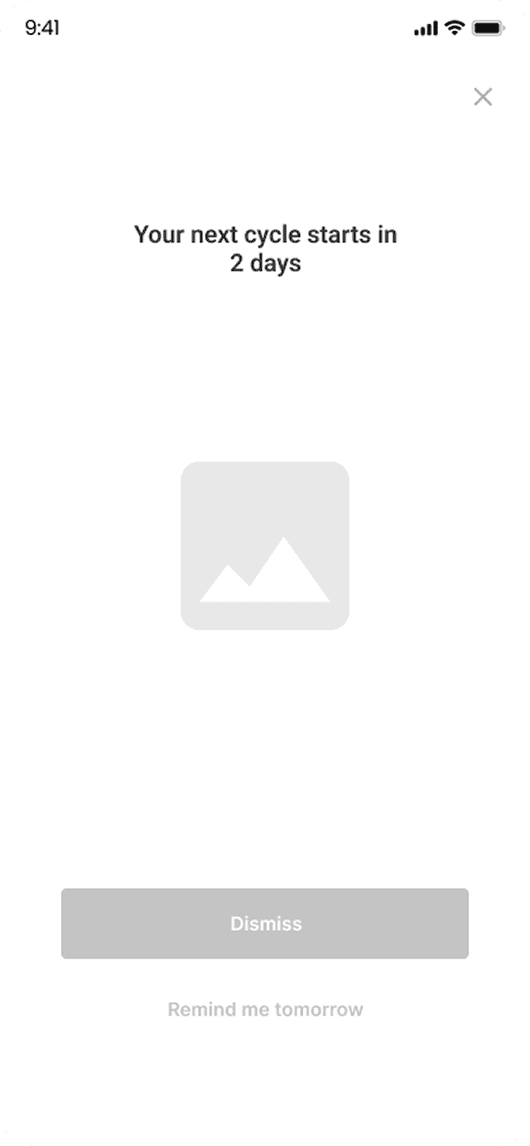
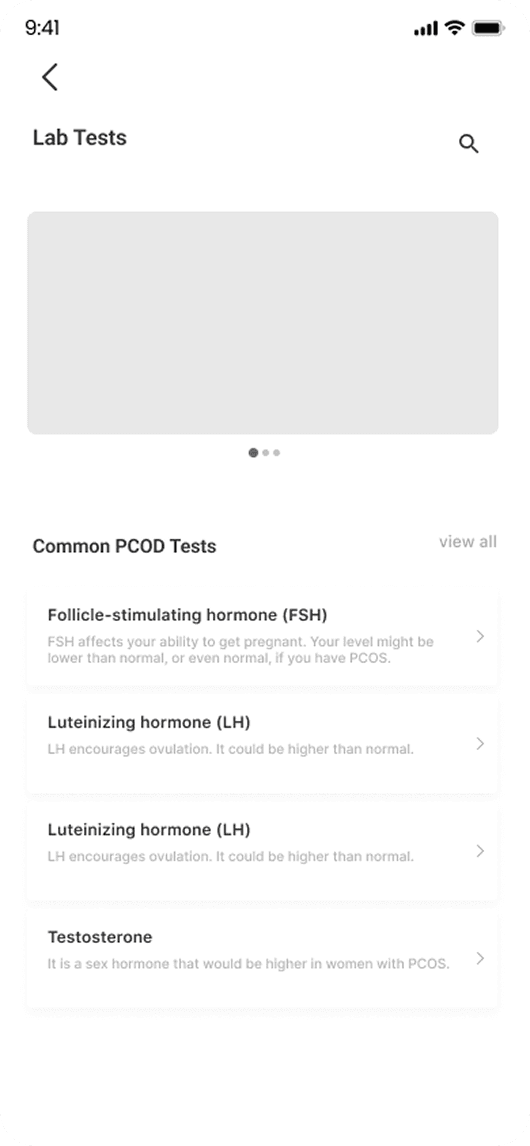
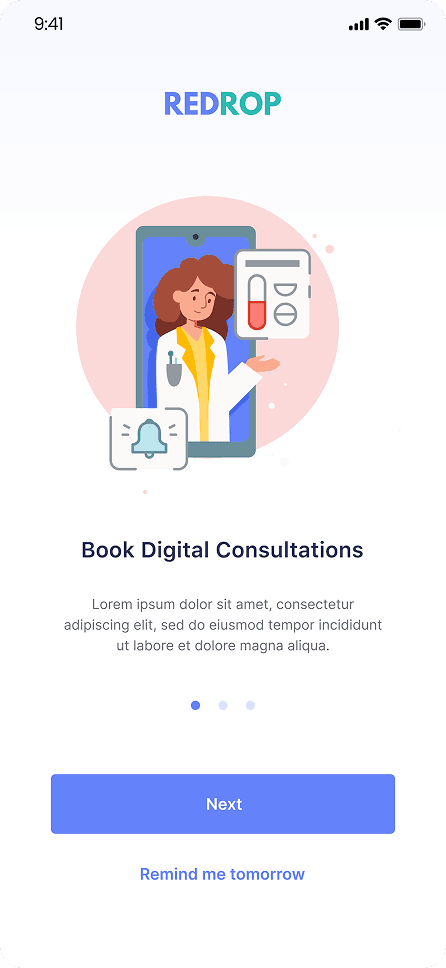
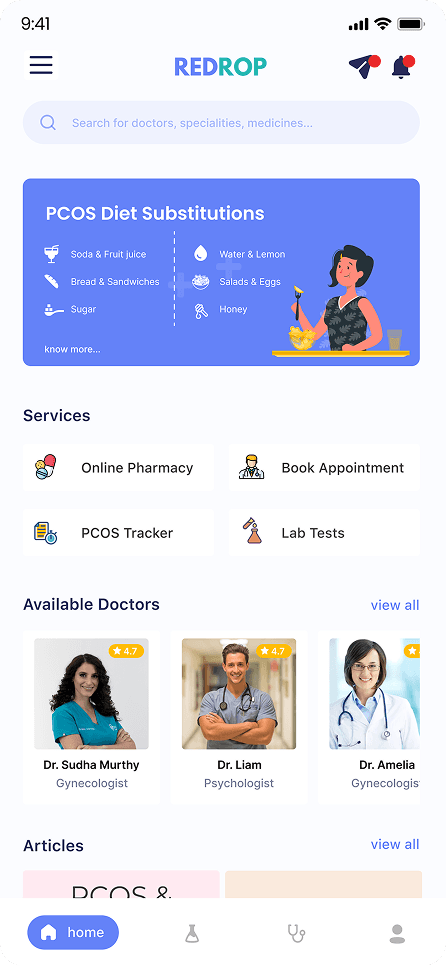
Once I had the structure and flow for the app, I started a lo-fi sketching to mid-fi designing process in order to give a body to the app that I could further test with users.
More Projects
✨
Vent-on
Mental health, App design
Hilabs
Health-tech, Dashboard design
Shelfpay YC22
Fintech, App and Website design